

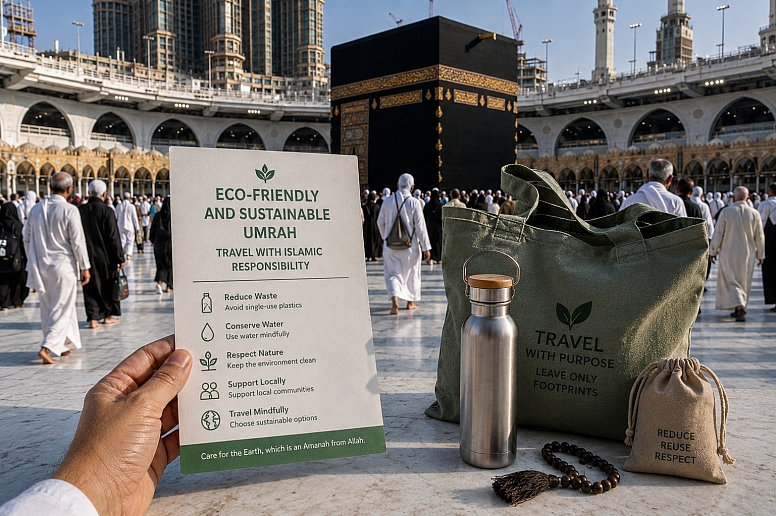
Eco-friendly & Sustainable Umrah: Responsible Islamic Travel
Performing Umrah is a deeply spiritual journey undertaken solely for the sake of Allah. In today’s world, it also provides an opportunity to reflect on responsible living and mindful use of resources. Islam teaches believers to treat the Earth as a trust (amanah) from Allah and to avoid excess and waste in all aspects of life.
From choosing environmentally conscious accommodation and transport to reducing waste and supporting local communities, every action can contribute to a more responsible journey. A mindful approach to Umrah helps ensure that the pilgrimage remains spiritually enriching while also reflecting Islamic values of moderation (wasatiyyah), stewardship, and gratitude towards Allah’s creation.
Are you living in the UK and looking for the cheapest Umrah packages? You can book all-inclusive cheap Umrah packages UK from the Hajj Umrah Package that includes Visas, Umrah flights, hotels, transport, and Ziyarat of holy places.
Understanding sustainable Umrah
Sustainable and eco-friendly Umrah refers to performing the pilgrimage in a way that respects both religious obligations and responsible use of resources. It is not an additional religious requirement, but rather a way of applying Islamic ethics of care, balance, and avoidance of waste during travel and worship.
The aim is to ensure that the journey leaves minimal negative impact on the environment and local communities. This includes thoughtful consumption, respect for sacred sites, cleanliness, and supporting ethical services where possible.
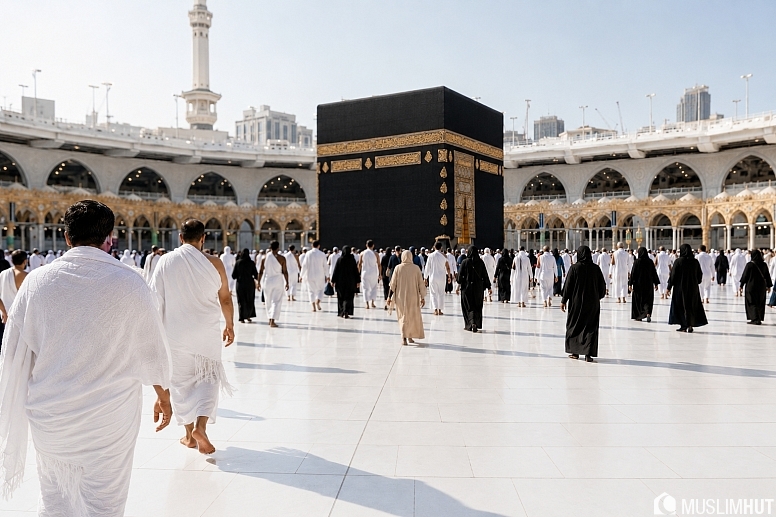
The focus remains on worshipping Allah, while ensuring that one’s actions reflect the broader Islamic teaching that humans are stewards (khulafā’) on Earth. By planning efficiently, avoiding unnecessary consumption, and using resources wisely, pilgrims can make their journey more mindful and responsible.
Islamic guidance on preserving and protecting the natural world
Islam strongly emphasises care for the natural world as part of a believer’s moral responsibility. The Qur’an teaches that all creation belongs to Allah, and humans are entrusted with its care. This trust requires balance, justice, and avoidance of wastefulness (israf), which is explicitly discouraged in Islamic teachings.
The Prophet Muhammad ﷺ emphasised cleanliness, moderation, and compassion towards all living beings. He ﷺ taught that even small acts such as removing harm from the road are acts of faith. He also encouraged conserving water, even when performing ablution near abundant water sources, highlighting the importance of avoiding excess in all circumstances.
Acts that benefit creation, such as planting trees or preventing harm to animals, are considered rewarding acts in Islam. These teachings encourage Muslims to reflect gratitude towards Allah by treating the environment with respect and responsibility.
Eco-friendly Umrah: planning your journey
You should prepare for your journey in a way that reflects mindfulness, responsibility, and respect for resources. Planning can significantly reduce unnecessary consumption and environmental impact.
- Choose travel options that are more efficient and reduce unnecessary emissions where possible.
- Book hotels and lodgings that follow responsible energy and waste practices
- Carry reusable items such as bottles and toiletries to reduce waste
- Avoid single-use items wherever possible
- Use digital resources such as mobile guides, apps, and e-tickets instead of printed materials.
- Reduce food waste and support responsible food providers
- Select transport options that are efficient and shared where practical
- Avoid unnecessary consumption and use hotel facilities responsibly
By preparing thoughtfully, pilgrims can align practical Umrah travel decisions with Islamic values of moderation and responsibility, ensuring that their journey remains both spiritually and ethically conscious.
Choosing green accommodation and transport
Selecting environmentally responsible accommodation and transport options is an important part of a mindful journey.
Choose hotels that implement:
- energy-efficient systems and responsible resource usage
- proper waste management practices
- sustainability-focused operational policies
Staying in such accommodations helps support businesses that take responsibility for reducing environmental impact. Within Saudi Arabia, using shared transport services or public shuttle systems where available can also reduce unnecessary emissions. For shorter distances, walking when appropriate is both practical and spiritually rewarding, as it reflects simplicity and mindfulness.
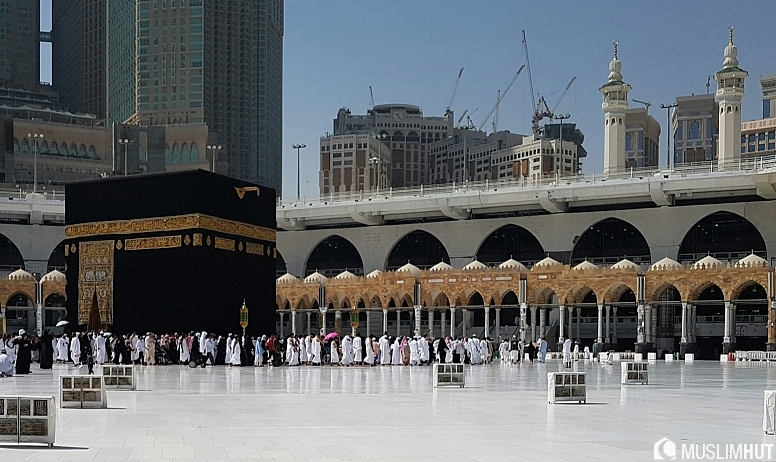
Reducing waste during the journey
Minimising waste is an important part of responsible travel and aligns with Islamic guidance against excess.
- Take only the amount of food you can reasonably consume
- Avoid single-use plastics wherever alternatives exist
- Do not discard usable food unnecessarily
- Follow local waste disposal regulations carefully
- Use reusable bags, bottles, and utensils instead of disposable alternatives.
- Separate recyclable materials from general waste where facilities are available
Such practices help maintain cleanliness in sacred spaces and reduce unnecessary strain on the environment.
Supporting ethical and local choices
Supporting local and ethical businesses contributes positively to communities and reflects Islamic values of fairness and compassion. Purchasing goods from local markets instead of mass international brands can help support local livelihoods and promote economic balance.
Engaging respectfully with local culture and communities is also encouraged in Islam, as good character (akhlaq) is a central part of faith. Honesty, kindness, and fairness in all dealings are strongly emphasised values that should guide behaviour during pilgrimage.
Such conduct ensures that the journey benefits not only the individual spiritually but also the wider community in a meaningful way.
Water conservation in the Ihram
Water is a significant blessing from Allah and must be used with care and gratitude. During Umrah, pilgrims are encouraged to use water responsibly, especially when performing ablution (wudu).
Zamzam water, in particular, should be treated with respect. It should be consumed mindfully without waste. Even small actions such as turning off taps while not in use, using minimal water for washing, and avoiding unnecessary usage reflect gratitude towards this blessing.
Islamic teachings clearly discourage waste even in acts of worship, highlighting that conservation is part of a believer’s ethical responsibility.
Mindful worship and environmental awareness
Mindful worship during Umrah involves full spiritual focus while also maintaining awareness of one’s surroundings and impact on them. Islam encourages believers to combine devotion with good conduct in all aspects of life.
- Integrate worship with responsible behaviour towards creation
- Use resources carefully and avoid waste
- Walk when possible instead of relying unnecessarily on transport
- Maintain cleanliness in all areas, especially sacred spaces
- Respect holy sites and the surrounding environments
- Choose services that reflect ethical and responsible practices
These actions help pilgrims maintain a balance between spiritual focus and ethical responsibility, reflecting the holistic teachings of Islam.
Hajj Umrah Package brings amazing Ramadan Umrah deals for the holy month of Ramadan with exclusive deals and a variety of options to choose from.
Recent Posts






0.0401