

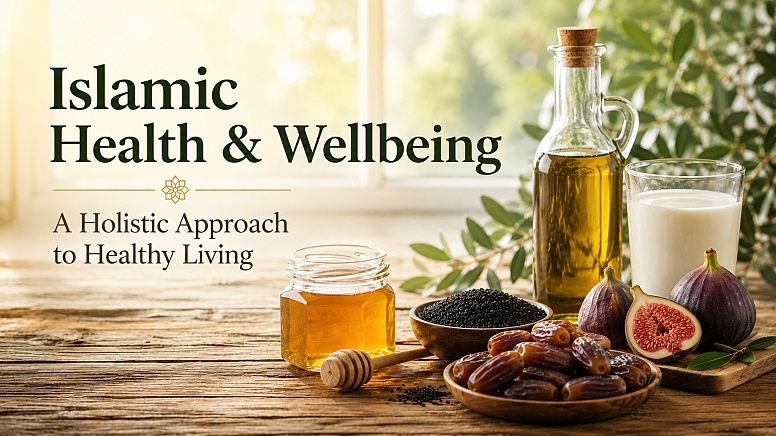
Islamic Health & Wellbeing: A Holistic Approach to Healthy Living
Islam is not only a religion of worship and spirituality but also a comprehensive way of life that provides guidance for physical, mental, and emotional wellbeing. More than 1,400 years ago, the teachings of the Qur'an and the Sunnah introduced principles of healthy living that modern science continues to validate today.
From nutritious foods to personal hygiene, moderation, exercise, and mental wellness, Islam encourages believers to care for their bodies as a trust (amanah) from Allah.
The Importance of Health in Islam
The Prophet Muhammad ﷺ emphasized the value of good health, saying:
"There are two blessings which many people lose: health and free time." (Sahih al-Bukhari)
Good health enables Muslims to worship Allah effectively, serve their families and communities, and live productive lives. Islam, therefore, encourages preventative healthcare and healthy habits rather than waiting for illness to occur.
Health Benefits of Sunnah Foods
The Sunnah includes several foods that were regularly consumed or recommended by the Prophet ﷺ. Many of these foods have significant nutritional and medicinal benefits.
1. Dates (Tamr)
Dates were among the Prophet's ﷺ favorite foods and remain a staple throughout the Muslim world.
Health benefits include:
- Rich in natural sugars for quick energy.
- High in fibre, supporting digestive health.
- Contain potassium and magnesium, which support heart health.
- Provide antioxidants that help reduce inflammation.
The Prophet ﷺ recommended eating dates, particularly in the morning and when breaking the fast.
2. Honey
Allah mentions honey in the Qur'an:
"There emerges from their bellies a drink, varying in colours, in which there is healing for people." (Qur'an 16:69)
Health benefits include:
- Natural antibacterial and antimicrobial properties.
- May soothe sore throats and coughs.
- Contains antioxidants that support immune function.
- Can serve as a healthier alternative to refined sugar when used moderately.
3. Black Seed (Nigella Sativa)
The Prophet ﷺ said:
"In the black seed there is healing for every disease except death." (Sahih al-Bukhari)
Modern research has found that black seed contains compounds with antioxidant and anti-inflammatory properties. It may support immune health and overall well-being when incorporated into a balanced diet.
4. Olive Oil
Allah swears by the olive in the Qur'an, highlighting its significance.
Benefits include:
- Rich in healthy monounsaturated fats.
- Supports cardiovascular health.
- Contains antioxidants that help protect cells from damage.
- May contribute to healthy cholesterol levels.
The Prophet ﷺ encouraged both consuming and applying olive oil.
5. Figs
Figs are mentioned in the Qur'an and are highly nutritious.
Benefits include:
- High in dietary fibre.
- Support digestive health.
- Provide important minerals such as calcium and potassium.
- Contain antioxidants that help protect the body from oxidative stress.
6. Milk
Milk was a beloved drink of the Prophet ﷺ.
Benefits include:
- Excellent source of calcium for healthy bones and teeth.
- Provides protein essential for muscle growth and repair.
- Contains vitamins and minerals important for overall health.
Moderation in Eating
One of the most remarkable aspects of Islamic health guidance is moderation.
The Prophet ﷺ said:
"The son of Adam fills no vessel worse than his stomach."
He advised that a person should leave room in the stomach for food, drink, and breathing.
This guidance aligns closely with modern findings regarding overeating, obesity, digestive disorders, and metabolic disease. Mindful eating and portion control remain essential components of good health.
Fasting and Its Health Benefits
Fasting during Ramadan is primarily an act of worship, yet it also provides physical benefits.
Research suggests that fasting may:
- Improve insulin sensitivity.
- Support healthy weight management.
- Encourage cellular repair processes.
- Promote self-discipline and mindful eating habits.
Beyond physical effects, fasting strengthens spiritual awareness and gratitude.
Hygiene: A Cornerstone of Islamic Health

Islam places extraordinary emphasis on cleanliness.
Examples include:
- Performing wudu (ablution) multiple times daily.
- Maintaining oral hygiene through brushing and the use of miswak.
- Regular bathing and grooming.
- Keeping clothing and living spaces clean.
These practices help reduce the spread of illness and promote overall well-being.
Physical Activity in Islam
The Prophet ﷺ encouraged strength, fitness, and beneficial recreation.
Activities associated with the Sunnah include:
- Walking
- Horse riding
- Archery
- Swimming
Regular exercise contributes to:
- Improved cardiovascular health.
- Stronger muscles and bones.
- Better mental health.
- Increased energy and productivity.
Islam encourages balance, avoiding both laziness and excessive strain.
Mental & Emotional Wellbeing
Islam recognizes the importance of emotional health.
Practices that support mental well-being include:
Prayer (Salah)
Regular prayer provides structure, reflection, and spiritual connection, helping reduce stress and anxiety.
Dhikr (Remembrance of Allah)
Remembering Allah brings tranquillity and inner peace.
The Qur'an states:
"Verily, in the remembrance of Allah do hearts find rest." (Qur'an 13:28)
Gratitude
Expressing gratitude is linked to greater life satisfaction and psychological resilience.
Community and Family Support
Strong family ties and community connections are encouraged throughout Islam and are associated with better mental health outcomes.
Sleep and Rest
The Sunnah also contains guidance on healthy sleep habits, including:
- Sleeping early when possible.
- Maintaining regular sleep patterns.
- Sleeping on the right side.
- Taking a short midday rest (qailulah).
Adequate sleep is essential for physical recovery, cognitive function, and emotional well-being.
Islam offers a holistic framework for health that integrates physical care, spiritual growth, emotional well-being, and social responsibility. Through nutritious Sunnah foods, moderation in eating, regular fasting, cleanliness, exercise, quality sleep, and remembrance of Allah, Muslims are provided with timeless guidance for living healthy and balanced lives.
By embracing these principles, believers can strive to fulfil their responsibility of caring for the body Allah has entrusted to them while seeking both worldly wellbeing and spiritual success.
LEAVE A COMMENT
Categories
Recent Posts



0.0614