

How to Teach Your Child Quran at Home: A Step-by-Step Guide for Parents
Every Muslim parent carries the same quiet hope - that their child will grow up with the Quran in their heart. But between school, homework, and the daily rush of family life, many parents wonder: where do we even begin? The good news is that teaching your child the Quran at home is absolutely possible, and it does not require you to be a scholar to do it well.
What it does require is the right approach, a little consistency, and an understanding of how children actually learn. This guide walks you through the entire process - from laying the foundation to building a lasting love for the Quran in your child.
1. Understand Where Your Child Currently Stands
Before you start, take a realistic look at what your child already knows. A child who recognizes Arabic letters is in a different place than one who has never seen them before. Avoid the mistake of jumping straight into recitation before the basics are solid.
Ask yourself: Can they identify Arabic letters? Do they understand how sounds are formed? Can they hold a simple two-minute focus? Honest answers to these questions will save you weeks of frustration and help you choose the right starting point.
2. Always Begin with Noorani Qaida
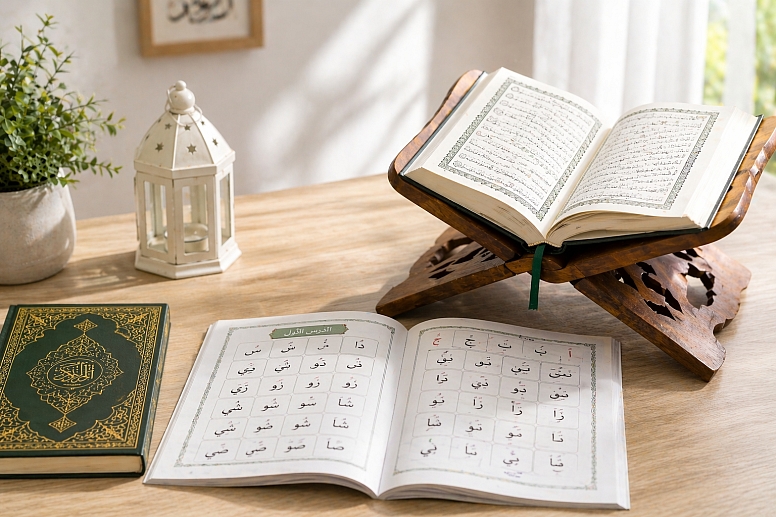
This is non-negotiable for beginners. Noorani Qaida is the foundational text of Quran learning - it teaches Arabic letter recognition, proper pronunciation of each sound, and how letters connect to form words. Skipping it and jumping into the Quran directly is like asking a child to read novels before they have learned the alphabet.
The Noorani Qaida is broken into short, progressive lessons that build on each other. Spend 15 to 20 minutes a day on it, and most children can complete it within three to four months, depending on age and consistency.
If you want expert-guided lessons for this stage, Quran Janan's Noorani Qaida course is specifically designed for beginners and children. Their teachers are trained to handle young learners with patience, and the lessons are structured to build confidence step by step.
3. Set Up a Dedicated Learning Space at Home
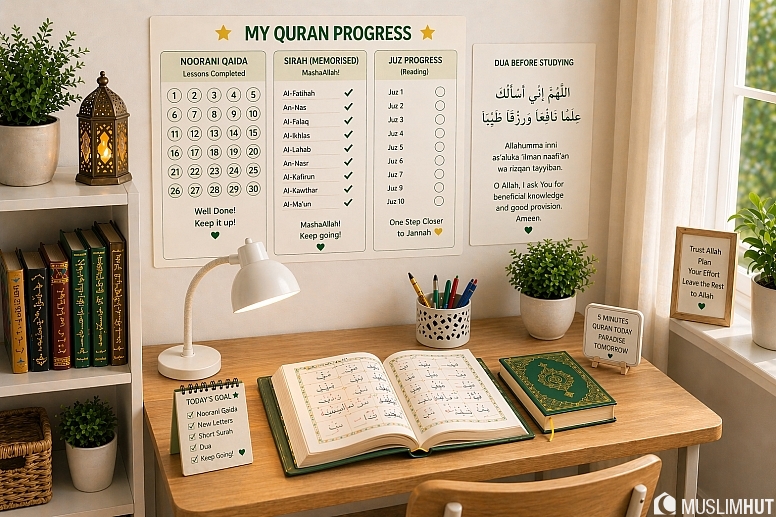
The environment matters more than most parents realize. A quiet corner with a small desk, good lighting, and a copy of the Qaida or Quran creates a mental signal for the child: this is where we learn. Keep distractions away - no tablets, no TV in the background.
A few things that help:
- A fresh wudu before the session helps children understand the sacredness of what they are doing.
- A consistent time slot - right after Fajr, or an hour after school - builds a habit without arguments.
- Keep the session short. Twenty minutes of focused learning beats an hour of wandering attention.
- Use a soft, patient voice. Children learn from tone as much as from content.
4. Introduce Tajweed Early - Do Not Wait
One of the most common mistakes parents make is letting children read the Quran without Tajweed for years, then trying to correct bad habits later. It is ten times harder to unlearn incorrect pronunciation than to learn it correctly from the start.
Tajweed does not mean complicated rules and terminology at age six. At the early stage, it simply means teaching your child to pronounce each letter from its correct point of articulation. The heavy rules - ghunnah, madd, qalqalah - come gradually.
For structured Tajweed instruction, Quran Janan's Tajweed ul Quran course offers systematic, rule-based teaching from certified instructors. Having a qualified teacher handle Tajweed while you reinforce it at home is often the most practical combination.
5. Your Role as a Parent: Guide, Not Teacher
You do not need to know Tajweed yourself to support your child's learning. Your job is to create the environment, maintain the routine, and show genuine interest in their progress. Ask them to recite to you after lessons. Praise specific improvement - not just general effort.
What breaks a child's Quran habit is usually not difficulty - it is the feeling that nobody cares. A parent who sits nearby, listens attentively, and celebrates progress is the single biggest factor in long-term consistency.
Also, model what you preach. If your children see you opening the Quran regularly, they grow up viewing recitation as something adults do - not just something they are forced to do as children.
6. Combine Home Learning with a Qualified Online Teacher
Home routines build habits. But a qualified teacher builds skill. The two work best together.
An online Quran teacher can identify pronunciation errors you might miss, provide structured progression, and maintain accountability in a way that home parents simply cannot. Children also respond differently to a teacher - the relationship carries its own kind of motivating weight.
For families based in the UK, USA, Canada, Australia, or Gulf countries, Quran Janan offers live one-on-one online classes with certified male and female teachers. They serve students of all ages and levels, including complete beginners, and offer a free trial so you can see how your child responds before committing.
7. Handle Resistance the Right Way
Every child goes through phases of resistance. Do not treat this as a failure. It is normal. The key is not to turn the Quran into a punishment or a battleground.
Practical approaches that work:
- Reduce the session length temporarily rather than cancelling entirely. Five minutes is better than zero.
- Tie small rewards to completion - not to performance. Finishing the session earns the reward, not reciting it perfectly.
- Find out what the child finds hard, specifically. Often, resistance is frustration in disguise.
- Take a break for a day or two if needed, but restart without drama. Momentum is easier to rebuild when there's no emotional weight attached.
8. Track Progress and Celebrate Milestones
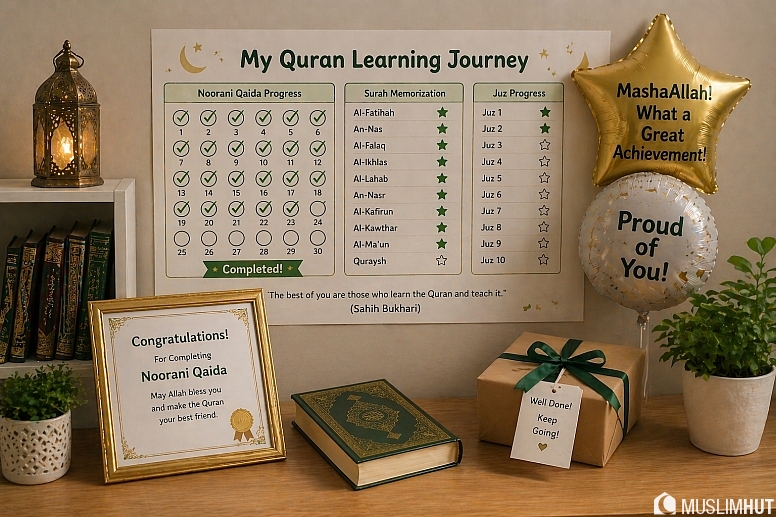
Children need to see that they are moving forward. A simple chart on the wall showing completed lessons, surahs memorized, or Qaida pages finished gives them a visual sense of progress that verbal praise alone cannot replace.
Mark real milestones. Completing Noorani Qaida is a big deal - treat it like one. Finishing the first juz deserves celebration. These moments build the kind of positive association with Quran learning that lasts into adulthood.
Frequently Asked Questions
Q: At what age should I start teaching my child the Quran?
A: Most children are ready to begin Noorani Qaida between ages four and five, once they can maintain short attention spans. However, exposure to Quranic recitation - listening to it, hearing it in the home - can and should begin from birth. Formal learning is different from early exposure, and both matter.
Q: How long should each Quran learning session be for a young child?
A: For children aged four to seven, keep sessions to 15–20 minutes maximum. For children aged eight and above, 30 minutes is a reasonable target. Consistency across shorter sessions produces far better results than occasional long ones.
Q: Should I teach my child the Quran myself or use an online teacher?
A: Ideally, both. Your role is to maintain a daily routine and create the right environment at home. An online teacher provides structured instruction, corrects pronunciation errors, and tracks academic progress. If you are not confident in your own Tajweed, relying on a qualified teacher for the actual instruction is the better approach.
Q: My child is struggling with Arabic letters. What should I do?
A: Slow down and go back to the basics. Do not rush through the Noorani Qaida. Spend extra time on difficult letters and use repetition without pressure. Some children need to hear and repeat a sound thirty to forty times before it sticks - that is completely normal and not a sign of a learning problem.
Q: Is it possible for a child to memorize the Quran while also attending school?
A: Yes, many children do this successfully. The key is consistency over intensity. Two focused sessions a day - morning and evening - of 20 to 30 minutes each is more sustainable than a marathon session on weekends. A structured memorization programme with a qualified Hifz teacher makes the biggest difference in long-term success.
Final Thoughts
Teaching your child Quran at home is one of the most meaningful investments a parent can make - in this life and the next. You do not need to have all the answers on day one. You need a solid starting point, a routine that fits your family, and the right support around you.
Begin with Noorani Qaida. Keep sessions short and consistent. Introduce Tajweed early. And when you need expert guidance, do not hesitate to bring in a qualified teacher. The combination of home reinforcement and professional instruction is what turns good intentions into lasting results.
The Prophet ﷺ said: "The best among you are those who learn the Quran and teach it." Every step you take to place the Quran in your child's life is a step toward that honour.
LEAVE A COMMENT
Categories
Recent Posts







0.0873